


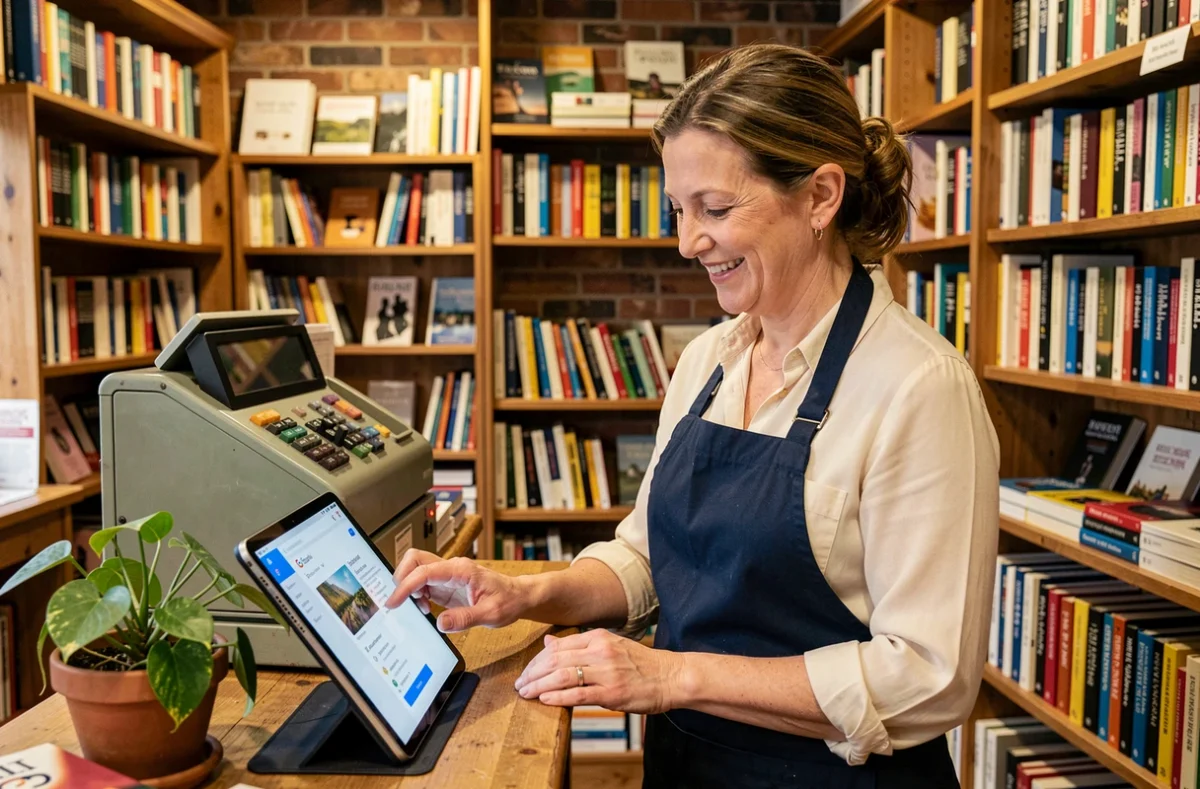
A Google Business Profile is a free listing that controls how a shop appears on Google Search and Google Maps. For high street retailers in the UK, the profile acts as a digital shop front: it shows the address, opening hours, photos, reviews and, increasingly, the products on the shelves.
Getting each field filled in matters, but the shops that convert passing searches into footfall are the ones whose profile matches what a customer actually finds when they walk through the door.
Related reading: Loyalty scheme ideas for UK cafés and restaurants
Stock accuracy on Google: the detail most high street shops overlook
Most optimisation guides focus on categories, keywords and review counts. Those elements help a listing appear in results. They do not, however, address the gap that frustrates shoppers most: arriving at a shop only to discover that the item shown online is out of stock or the door is locked during what the profile claims are opening hours.
Eligible UK retailers can use Google Merchant Center’s local inventory features to display products and live availability to nearby searchers. Where a shop’s own website does not show store-level stock, Google can host a local store page on the retailer’s behalf. Google also states that eligible UK retailers can use its Local Inventory app to add in-store products at no cost.
See also: Accessible marketing content for UK audiences
This turns a Business Profile from a static directory entry into something closer to a shop window. A customer searching “ceramic plant pots near me” can see not just that a shop stocks homeware, but that the specific item is on the shelf right now. The practical requirement is a reliable stock feed. If the data lags by days or weeks, the listing creates false expectations, and a wasted trip erodes trust faster than any negative review.
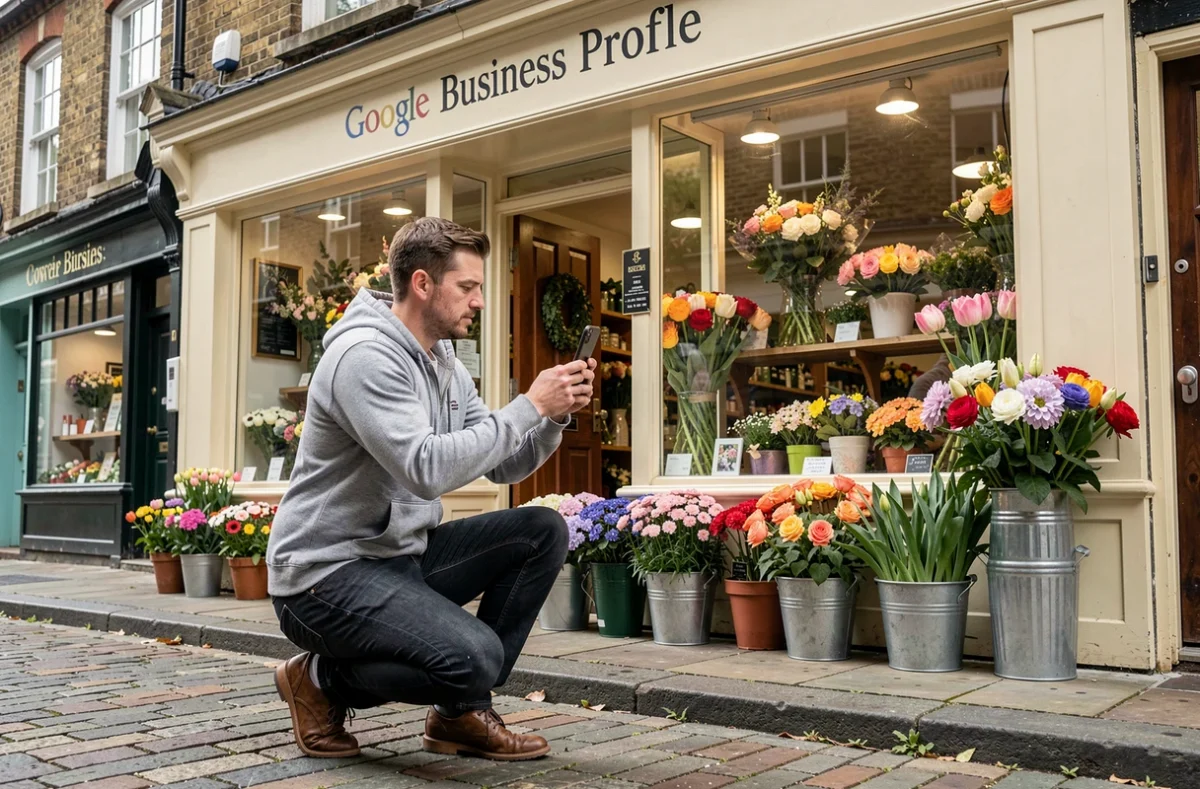
Opening hours, special hours and seasonal closures on Google Business Profile
An inaccurate set of opening hours is one of the simplest ways to lose a customer permanently. Google’s guidance allows shops to set special hours for public holidays or one-off events, and seasonal businesses can mark themselves temporarily closed during the off-season before restoring regular hours when trading resumes.
For a high street shop, the operational habit matters more than the initial setup. Hours tend to drift: a retailer starts closing early on Wednesdays, extends hours in the run-up to Christmas, or shuts for a bank holiday Monday. Each change needs updating in the profile, and each forgotten update is a potential journey a customer makes for nothing.
- Set regular hours once, then create special hours entries for every UK bank holiday well in advance. Google lets you schedule these ahead of time.
- If your shop trades seasonally (a seaside gift shop, a Christmas pop-up), use the temporary closure feature rather than deleting the profile or leaving stale hours visible.
- Check the profile from a logged-out browser or a different device at least once a month to confirm that what Google displays matches what you actually do.
The pattern is the same as stock accuracy: the value of the profile is only as good as its correspondence with reality.
UK review rules under the Digital Markets, Competition and Consumers Act 2024
Reviews remain one of the strongest local ranking signals. Research on highly visible Google Business Profiles found that top-ranking listings had collected significantly more reviews than those in lower positions. Encouraging feedback is therefore practical advice, but in the UK it now comes with a legal dimension that most guides skip over.
The Competition and Markets Authority’s guidance on the Digital Markets, Competition and Consumers Act 2024 makes several practices unlawful. Fake reviews are banned outright. Concealed incentivised reviews (offering a discount or gift in exchange for a review without disclosing the incentive) are prohibited. Presenting review information in a misleading way, including selectively suppressing genuine negative reviews, also falls foul of the rules.
For a high street shop, this means three things in practice:
- Ask every customer for a review in the same way, not only those who had a good experience. A printed card at the till with a QR code linking to your profile review page is straightforward and applies equally.
- If you offer any incentive (a loyalty point, a small discount on the next visit), state clearly at the point of asking that the review is incentivised.
- Never contact Google or use third-party tools to remove negative reviews simply because they are critical. Respond publicly, address the issue, and move on.
Fair review collection is no longer just reputation management. It is a compliance obligation.
Local citations and why your profile does not exist in isolation
A Google Business Profile’s visibility is partly determined by signals beyond the profile itself. Consistent business information across relevant UK directories and platforms reinforces the data Google uses to assess a listing’s legitimacy.
This means the shop’s name, address and phone number (often shortened to NAP) should read identically on Yell, Thomson Local, the local council’s business directory, any industry-specific listings, and the shop’s own website. A discrepancy as minor as “St.” versus “Street” or a missing postcode can weaken the signal.
Consistency across citations matters more than the number of directories listed on. Five accurate, well-maintained listings carry more weight than twenty with conflicting details. A quarterly check, comparing what each directory shows against the current reality, is a reasonable maintenance cycle for most independent shops.

Messaging on Google Business Profile: a staffing question, not a ranking trick
Google allows businesses to activate a messaging button on their profile. For a high street shop, the decision should rest on a single operational question: can someone reply within a few minutes during trading hours?
Messaging is better treated as a route to conversion than a ranking tactic. A prompt reply to “Do you have this jacket in size 12?” can close a sale before the customer visits a competitor. A reply that arrives four hours later, or never, signals that the shop is unresponsive. If staffing does not allow quick replies, it is better to leave the feature off and rely on a phone number.
The same logic applies to every interactive feature on the profile. Posts, Q&A responses and photo uploads all contribute to an active listing, but only if the shop can sustain the effort consistently. A burst of activity followed by months of silence looks worse than a steady, modest rhythm.
The single most useful habit for any high street shop managing a Google Business Profile is not adding more content to the listing. It is walking out of the shop, pulling up the profile on a phone, and checking whether what appears on screen matches what a customer will find on the other side of the door.




