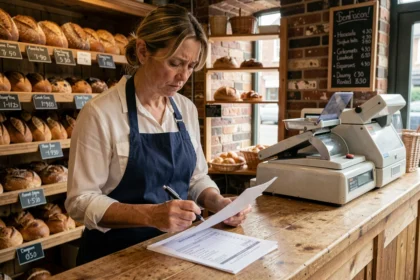

Walk into a town-centre convenience store on a Tuesday evening and you will notice something that the footfall headlines miss: the basket is small, the visit is short, and the shopper probably ordered a weekly bulk delivery online two days ago. That split between planned online shops and spontaneous local purchases is reshaping what UK high streets actually need to be in 2026, and the shift is more structural than seasonal.
The Government’s Hope on the High Street strategy, published in October 2026, confirms that footfall in England remains below pre-pandemic levels even as online retail claims a larger share of total spending than it did before 2020. Month-on-month improvements in visitor numbers have appeared at various points this year, but set against a year-on-year decline they look more like noise than recovery.
See also: Employment law changes in 2026: key updates for UK employers
Convenience trips vs bulk shops: why the split matters for high street retail
Most competitor analyses treat “UK shoppers” as a single group whose confidence rises or falls in unison. Local retail studies paint a different picture: smaller top-up missions gravitate to neighbourhood stores while larger planned shops move online or to out-of-town supermarkets.
That distinction has practical consequences for anyone running or investing in a high-street unit. A shop that depends on big-basket weekly visits is competing with delivery slots and click-and-collect lockers. A shop geared towards quick top-up purchases and impulse buys fits the way people actually use their local centre now.
Related reading: UK Budget 2026: what the latest tax changes mean for businesses
The difference also explains why footfall can tick upward without translating into higher retail sales volumes. More visits do not mean more spending per visit. Shoppers popping in for milk and a sandwich register on the counter but barely move the till total compared with a full weekly trolley.
Business rates reform in England: what changes in April 2027
Policy is catching up with the structural shift, at least in England. The Government announced a business rates package designed to take more high-street businesses out of rates liability, with implementation scheduled for April 2027. The aim is to reduce the fixed-cost burden on smaller retail, hospitality and leisure premises that anchor local centres.
Two constraints are worth flagging. First, business rates are devolved, so the April 2027 measures apply to England only. Scotland, Wales and Northern Ireland set their own reliefs and timelines. Retailers operating across borders cannot assume uniform treatment.
Second, rate relief addresses occupancy cost but does nothing about the underlying question of demand. A shop paying less in rates still needs a reason for people to walk through the door. The reform buys breathing room rather than solving the trading model.
Mixed-use high streets: what “not just retail” looks like in practice
The phrase “mixed-use high street” appears in almost every regeneration strategy, but the operational detail matters more than the label. Councils and landlords are increasingly filling vacant units with a blend of uses that would have looked odd a decade ago:
- Co-working desks and flexible office space above ground-floor shops, generating weekday footfall that pure retail never did
- Health and wellbeing services (GP surgeries, physiotherapy clinics, dental practices) relocated from out-of-town parks into central premises
- Food and drink operators ranging from speciality coffee to street-food halls, designed around short dwell times and social visits rather than destination dining
The pattern works because it aligns with the way people now split their time. A centre that gives someone three reasons to visit retains footfall even if none of those reasons is a traditional retail purchase. The shop benefits from the traffic generated by the clinic upstairs or the cafe next door.
Where fashion retail fits into this mix
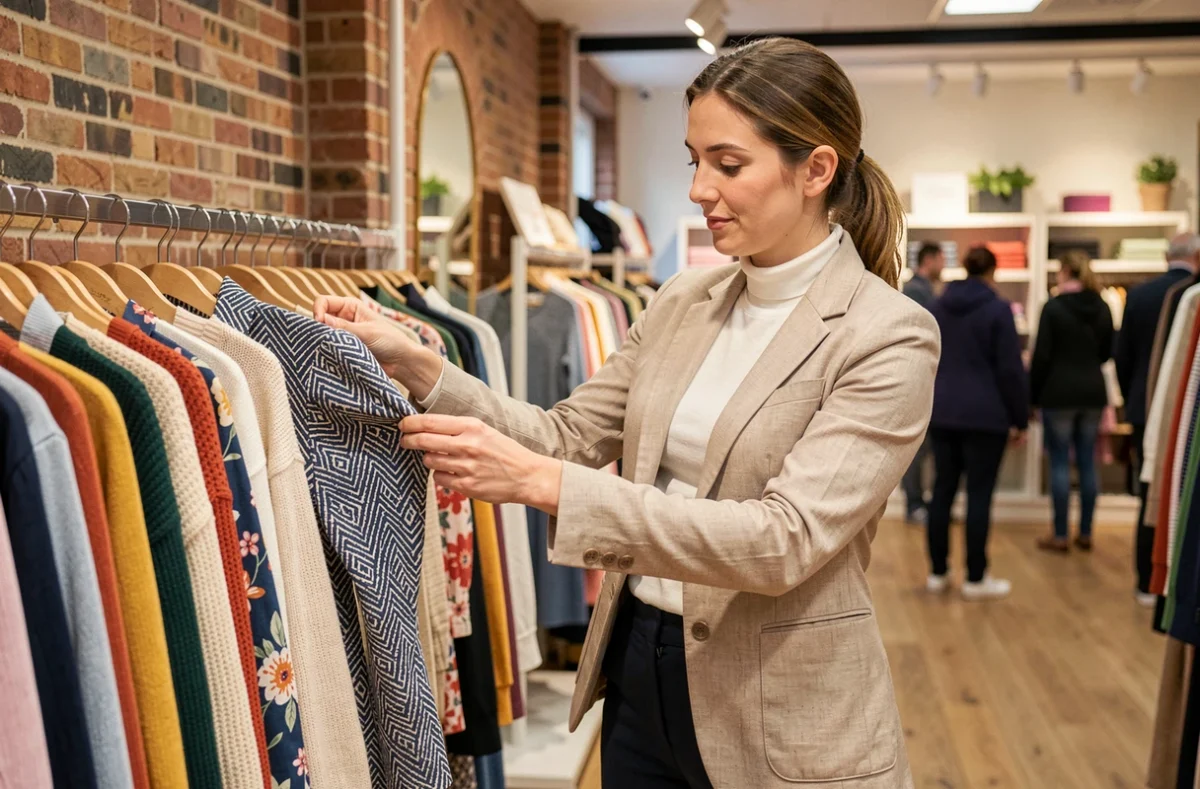
Clothing is the most digitised corner of UK retail, with online accounting for a larger share of sales than in most other categories. Physical fashion stores that survive on the high street tend to offer something the parcel cannot: styling advice, same-day availability for an event, or the tactile check that fabric and fit demand.
Resale and circular fashion formats are gaining permanent shelf space in town centres rather than operating solely through apps. These formats suit high-street footprints because they require less stock depth than conventional retailers and attract browsers who treat the visit as leisure.
Value and sustainability: how UK shoppers weigh both in 2026
Price sensitivity has not eased. Food prices continue to rise across retail and hospitality, and shoppers remain cautious with discretionary budgets. That caution does not, as some commentary suggests, kill interest in sustainability. It redirects it.
Consumers in 2026 respond to sustainability claims that also deliver a tangible saving. Refill stations that cut packaging cost per unit, energy-efficient appliances that lower bills, clothing repairs that extend garment life: each proposition works because the environmental benefit and the financial benefit point in the same direction.
Where the two pull apart (a premium-priced eco product with no cost payback), uptake drops sharply. Retailers who frame sustainability as a values surcharge rather than a practical saving are misjudging where most household budgets sit this year.
Short-term footfall bounce vs long-term high street transformation
The temptation after a decent trading week is to declare the high street “back.” Recent ONS data illustrate why that reading is premature: a month-on-month footfall rise can sit alongside a year-on-year decline, and the two trends carry entirely different implications for investment.
Short-term bounces typically follow warm weather, bank holidays or promotional events. They prove that people will visit a town centre given the right prompt. They do not prove that the underlying pattern of weekly shopping has reversed. The bulk of routine spending, groceries above all, continues to migrate online or to large-format stores with car-park access.
What is changing durably is the role of the high street itself. The centres gaining ground are those that have stopped trying to compete with logistics networks on range and price, and started competing on proximity, speed and experience. A local bakery, a barber, a click-and-collect point, a gym: these are services that cannot be delivered to a doorstep, and they form the backbone of a viable 2026 town centre.
The gap between a good month and a genuine turnaround will keep widening until retail planning catches up with how households actually divide their spending. For now, the high street’s future sits not in recovering lost volume but in owning the missions that online fulfilment cannot replace.