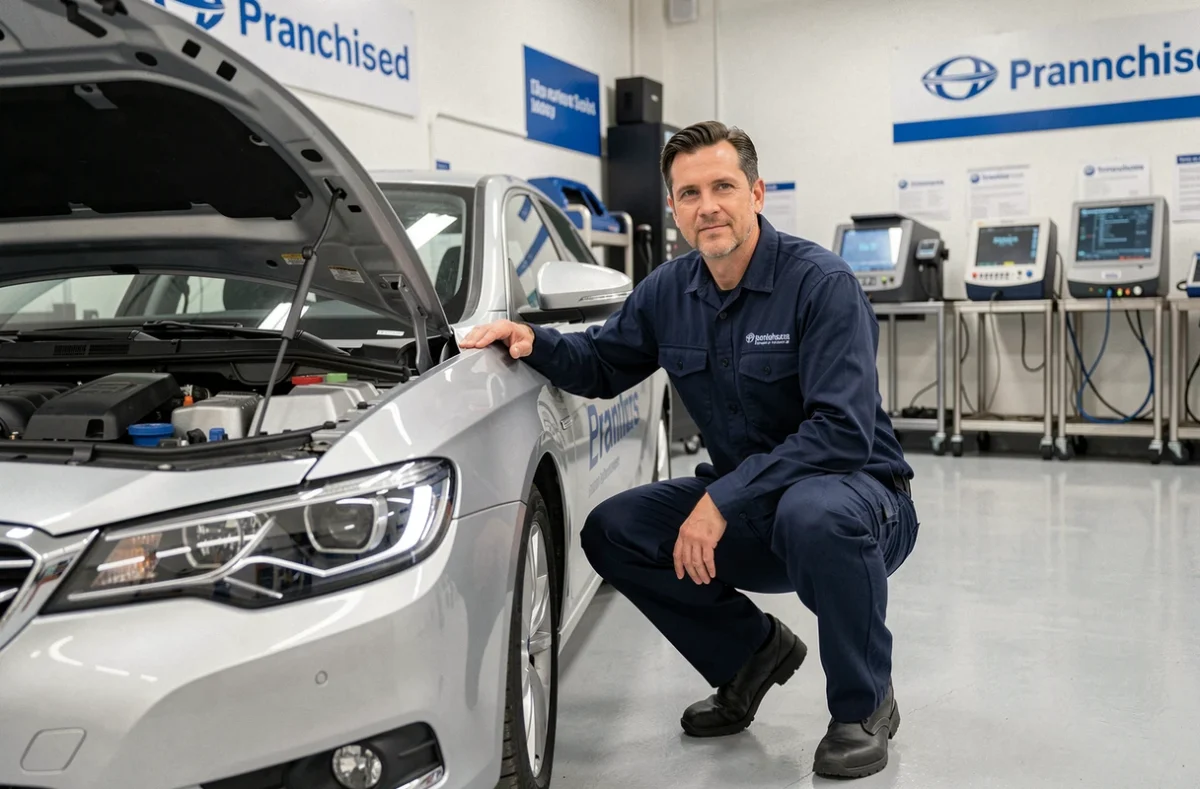
When a service is due, the choice between a franchised dealership and an independent garage shapes what you pay, what parts go into your car, and whether your warranty stays intact. For electric vehicles still under manufacturer cover, the question cuts deeper: does the garage have qualified technicians and the right diagnostic equipment for high-voltage battery systems and ADAS calibration? This article measures the differences that matter most, starting with where the data points diverge.
Dealership vs independent garage: cost and capability compared
| Factor | Franchised dealership | Independent garage |
|---|---|---|
| Typical labour rate | Higher (some areas reaching £141/hour) | Lower (averaging around £76 per hour) |
| Parts sourced | Genuine OEM parts as standard | OEM-equivalent or genuine parts, wider supplier choice |
| Access to technical service bulletins | Direct from manufacturer | Available via third-party platforms, though sometimes delayed |
| EV high-voltage training | Factory-trained on own brand | Varies: check for IMI Level 3 or Level 4 EV qualification |
| ADAS recalibration equipment | Brand-specific tooling included | Multi-brand rigs available, but not universal |
| Warranty recognition | Automatically logged in manufacturer system | Valid under UK consumer law, but records must meet manufacturer spec |
Independent garages can charge roughly half the labour rate of a franchised dealer, and some brand-specialist independents advertise savings of up to 35% on a full service. That gap narrows once you factor in software-locked diagnostics on newer models, where the dealer’s tooling is included in the price and an independent may need to invest separately.
Further reading: UK home insurance: what to check before renewing in 2026
EV servicing qualifications: what to check before booking
The IMI’s July 2025 report flagged a risk that the UK may lack enough EV-qualified technicians to meet demand by 2035. EV qualifications issued in the first quarter of 2025 rose compared with the previous quarter, yet fell year-on-year against the same period in 2024. That trend matters whether you choose a dealer or an independent, because competence is not guaranteed by the badge on the building.
For a battery electric vehicle still under warranty, two qualifications signal genuine capability:
Further reading: Broadband switching: how One Touch Switch works in the UK
- IMI Level 3 in Electric/Hybrid Vehicle System Repair and Replacement, covering safe isolation and work on high-voltage components up to the battery pack
- IMI Level 4 in Diagnosis, Testing and Repair of Electric/Hybrid Vehicles and Components, the highest current UK standard for complex fault-finding on EV drivetrains
- Brand-specific ADAS calibration certification, confirming the technician can reset camera and radar systems after windscreen replacement or suspension work
A franchised dealer’s technicians will typically hold the brand’s own accreditation, which maps onto IMI levels. An independent garage may hold the same IMI qualifications without the brand badge, so the practical check is straightforward: ask which level their EV technicians are certified to, and whether they carry the calibration rig for your car’s ADAS suite.
Warranty, extended cover, and recall work: three separate questions
UK consumer law, reinforced by the Block Exemption Regulation, protects your right to have routine servicing carried out at any garage without voiding the manufacturer’s standard warranty, provided the work meets the manufacturer’s specification and uses parts of matching quality. That principle is well established.
What catches owners out is treating all warranty-related situations the same way. They are not. Routine servicing, warranty repairs, and safety recalls follow different processes. A warranty repair for a known defect is handled by the manufacturer through its franchised network, at no cost to you. A safety recall is likewise processed through the dealer. An independent garage can service the car, but it cannot submit a warranty claim or process a recall on your behalf.
Extended warranty programmes add another layer. Some manufacturer-backed extended warranties or third-party plans stipulate that servicing must be carried out within the franchised network to keep the extended cover valid. The standard warranty and an extended programme may impose different conditions on where the car is serviced. Before assuming the Block Exemption rules apply to your extended cover, read the specific terms of that programme.
Picking the right garage for your car’s age and technology
The dealership-versus-independent question does not have a single answer because the variables shift with the car. A three-year-old EV on a manufacturer-backed extended warranty sits in a different position from a seven-year-old petrol hatchback with no warranty obligations.
For newer vehicles with active warranty or extended cover, the dealership’s direct link to the manufacturer’s service record system removes administrative friction. Any software update, technical service bulletin, or recall notice is applied during the visit. The cost premium buys seamless documentation and brand-specific tooling that requires no verification on your part.
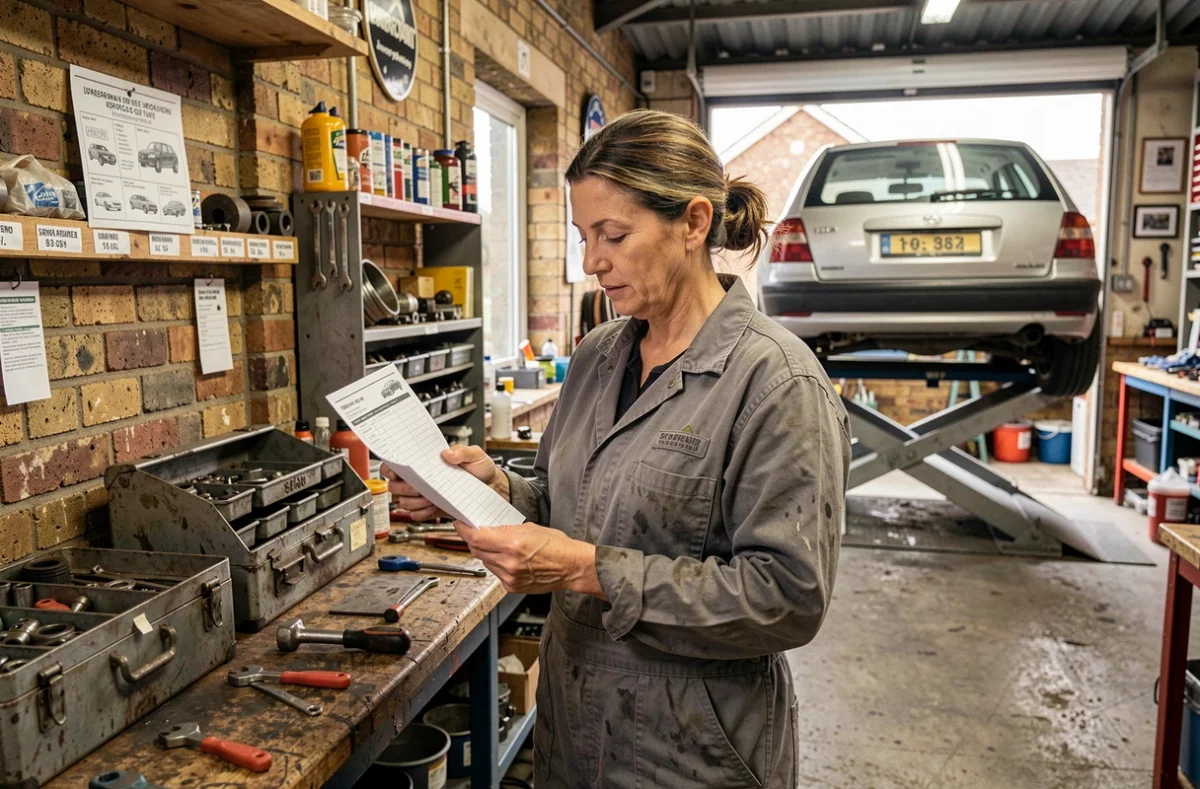
For older vehicles, or those whose warranty has expired, an independent garage’s lower overheads translate directly into lower bills. The quality of work depends on the technician, not the franchise. Look for membership of a recognised trade body (such as the Independent Garage Association or Good Garage Scheme), online service-history platforms that produce manufacturer-format records, and willingness to show you the parts before and after replacement.
- Ask for the technician’s EV qualification level if your car has a high-voltage system, regardless of whether the garage is franchised or independent
- Confirm that the garage uses a digital service-record platform accepted by the manufacturer, so future buyers or warranty administrators can verify the history
- Check whether your specific warranty programme (standard or extended) requires franchised-network servicing, rather than relying on the general Block Exemption principle
- For ADAS-equipped cars, verify the garage owns or has access to the calibration rig for your vehicle’s make and model
The gap between a dealership and a good independent is narrower than the price difference suggests, but it widens sharply around EV battery work and ADAS calibration, where specialist equipment and training are non-negotiable. Choosing on cost alone misses the point. Choosing on badge alone overpays for it. The most reliable filter is verifiable qualification, matched to what your car actually needs at this stage of its life.