
Online shopping in the United Kingdom operates under a layered set of consumer protections, most of which trace back to the Consumer Rights Act 2015 and the Consumer Contracts Regulations 2013. These rules cover goods, digital content and services, each with distinct cancellation windows and refund calculations.
The Digital Markets, Competition and Consumers Act 2024 introduces a new subscription-contract regime planned for new contracts from its start date. These developments reshape the framework for anyone who buys, subscribes or renews online.
Further reading: UK defamation law and the risks of posting online
Cancellation rights when goods, digital content and services overlap
Most guides separate online purchases into neat boxes: physical goods on one side, digital content on the other, services somewhere in between. Real transactions rarely fit so tidily.
Consider a subscription that bundles a physical product delivered monthly, access to a streaming library and a maintenance service. Under the Consumer Rights Act 2015, each element carries its own quality standard. Goods must be of satisfactory quality, fit for purpose and as described. Digital content must meet the same benchmarks. Services must be performed with reasonable care and skill.
You may also like: Employment rights changes in 2026: what UK employers need to know
The cancellation clock differs too. For goods ordered online, the 14-day cancellation period starts the day after delivery. For services, it starts the day after the contract is entered into. For digital content supplied on a non-tangible medium, the right to cancel can be lost once downloading or streaming begins, provided the retailer obtained the consumer’s express consent and informed them that they would lose their cancellation right.
When a single subscription mixes all three categories, the question of which cancellation window applies to which component is not always straightforward. If the retailer does not separate the elements clearly in its terms, the consumer may retain the broadest applicable right. Retailers who fail to provide the required pre-contract information can see the cancellation period extended by up to 12 months.

Refund calculations for subscription contracts under the DMCCA 2024
The Digital Markets, Competition and Consumers Act 2024 introduces specific subscription protections covering qualifying consumer contracts for goods, services and digital content. The regime targets contracts that auto-renew or roll over, requiring businesses to send clearer reminders and offer simpler exit routes.
Draft guidance from the regulator draws a practical distinction between two methods of working out subscription refunds:
- Time-based calculation applies to continuous-access subscriptions, such as streaming platforms or software licences. The refund reflects the unused portion of the billing period remaining after cancellation.
- Unit-based calculation applies where a subscription provides a set number of items or sessions, such as a monthly book box or a block of personal-training sessions. Here, the refund is determined by how many units have not yet been delivered or used, rather than simply counting unused days.
- Where a subscription bundles both continuous access and discrete units, the guidance suggests splitting the components and applying the appropriate method to each, though it remains to be seen how retailers will implement this in practice.
The planned regime applies to new contracts from its start date, rather than automatically extending these new protections to existing agreements. Consumers on legacy rolling contracts would continue under the existing Consumer Contracts Regulations until their contract renews into one that falls within the new framework.
What happens during auto-renewal
Auto-renewal is the point where many disputes arise. Under the current rules, a retailer must remind the consumer before a free trial converts to a paid subscription, but enforcement has been patchy. The DMCCA 2024 regime tightens this by requiring businesses to send renewal reminders at prescribed intervals and to provide a straightforward mechanism to cancel without navigating buried settings or customer-retention calls.
If a retailer fails to send the required reminder, the consumer’s right to a full refund of the renewal charge strengthens considerably. Missing a renewal reminder could expose the retailer to a full refund obligation for the entire renewed period, not merely a pro-rata return.
Faulty goods and the 30-day refund window
Separate from the right to change your mind, the Consumer Rights Act 2015 gives buyers a short-form right to reject goods that do not meet the statutory standard. Within 30 days of delivery, a consumer can reject faulty goods for a full refund. After that window closes, the retailer must be given one opportunity to repair or replace.
If the repair or replacement fails, or if the retailer does not carry it out within a reasonable time and without significant inconvenience, the consumer can then claim a price reduction or a final right to reject. The final right to reject entitles the buyer to a refund, though the retailer may make a deduction for the use the consumer has had of the goods, except during the first six months.
For digital content, the position is slightly different. There is no short-term right to reject in the same way. Instead, the consumer has a right to repair or replacement first, and if that fails, a right to a price reduction. This matters for anyone who buys a game, an app or an e-book that turns out to be buggy or incompatible with their device.
Proof and practical steps
Retailers sometimes ask for a receipt, but legally, any reasonable proof of purchase suffices: a bank statement, an order confirmation email or a delivery note. The burden of proof regarding whether goods were faulty at the time of delivery sits with the retailer for the first six months. After that, it shifts to the consumer.
Exemptions and limits on the right to cancel online orders
Not every online purchase carries a 14-day cooling-off period. The Consumer Contracts Regulations 2013 list several categories where cancellation rights do not apply:
- Sealed audio, video or software recordings, once unsealed after delivery
- Perishable goods, such as fresh food or flowers
- Personalised or bespoke items made to the consumer’s specification
- Sealed goods that are not suitable for return for health or hygiene reasons, once unsealed
- Newspapers, periodicals and magazines (except subscription contracts, which retain separate cancellation rights)
Retailers cannot add their own exemptions beyond those set out in the Regulations. A returns policy that attempts to exclude categories not listed in the legislation is unenforceable against the consumer, even if prominently displayed on the website or printed on a receipt.
It is also worth noting that the right to cancel applies regardless of whether the item was purchased at full price or in a sale. Sale items carry the same statutory cancellation and refund rights as full-price goods. Any notice stating otherwise is misleading and potentially unlawful under the Consumer Protection from Unfair Trading Regulations.
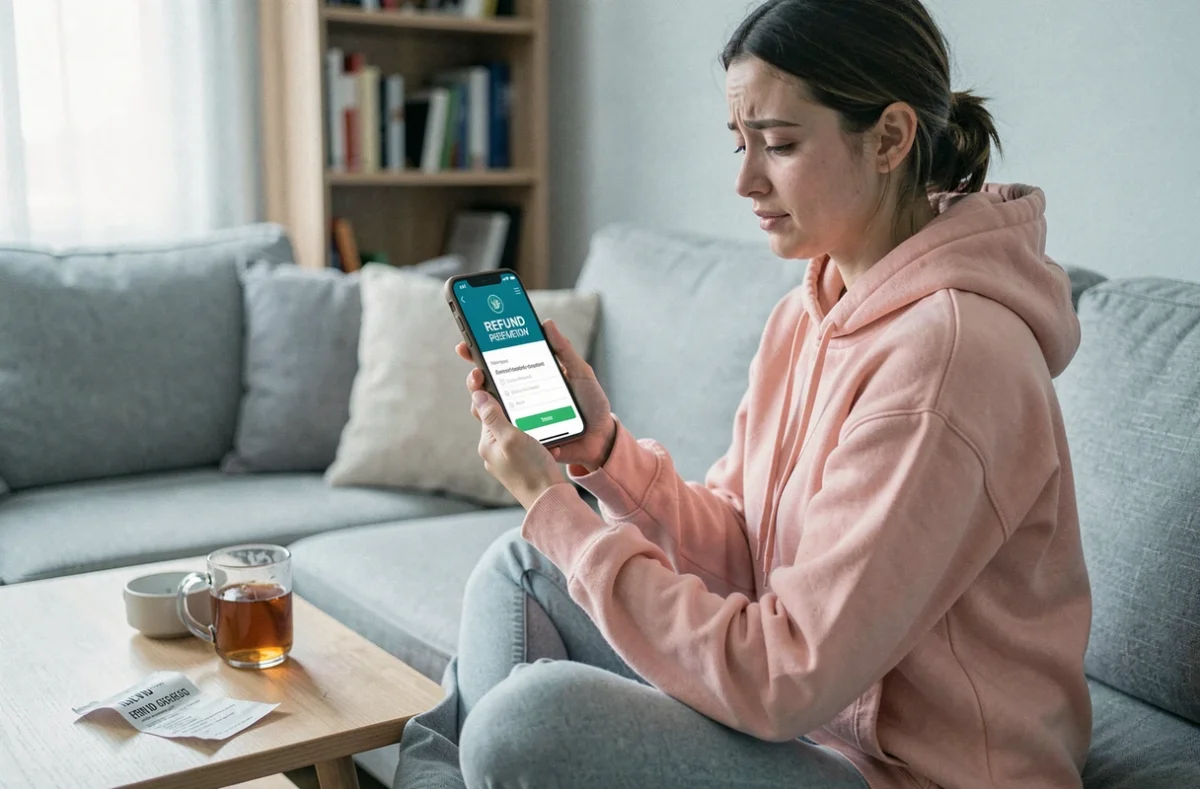
The coming subscription-contract rules under the DMCCA 2024 add a further layer for consumers who buy bundled products online. Until those provisions take effect for new contracts, the existing framework under the Consumer Rights Act 2015 and the Consumer Contracts Regulations 2013 remains the baseline. Keeping track of which cancellation window applies to which part of a purchase, and whether a refund should be calculated by time or by units, is now a practical necessity rather than a legal curiosity.