
Local SEO for UK service businesses is the practice of optimising a company’s online presence so it appears in geographically relevant search results, map listings, and increasingly in AI-generated answers. For plumbers, solicitors, cleaners, physiotherapists, and similar firms that travel to clients or operate from a single premises, it determines whether a nearby customer finds them or a competitor first.
Measuring local visibility when clicks disappear
A growing portion of local searches now ends without anyone visiting a website. Ofcom’s The Era of Answer Engines, published on 4 November 2025, examines how generative-AI search products (including Google AI Overviews) reshape the way UK adults find information. For a service business, this means a potential customer may read an opening time, phone number, or service description directly on the results page.
Recommended read: Accessible marketing content for UK audiences
That shift creates a measurement problem. Traditional analytics track website sessions and form submissions. If Google or an AI tool answers the query outright, visibility may never produce a traceable click or call.
Three signals help fill the gap:
See also: Christmas marketing campaigns for UK small businesses
- Google Business Profile Insights shows how often a listing appears in Search and Maps, and how many people request directions or tap to call, even if they never reach the website.
- Search Console’s performance report captures impressions for branded and service-related queries, revealing whether the business name surfaces in results regardless of click-through rate.
- Tracking unique phone numbers on directory listings and the Google profile itself can attribute calls that bypass the site entirely.
None of these is perfect. The honest position is that some local impressions are now unmeasurable, and any reporting framework should acknowledge that gap rather than pretend every touchpoint can be counted.
Google Business Profile setup for service-area businesses
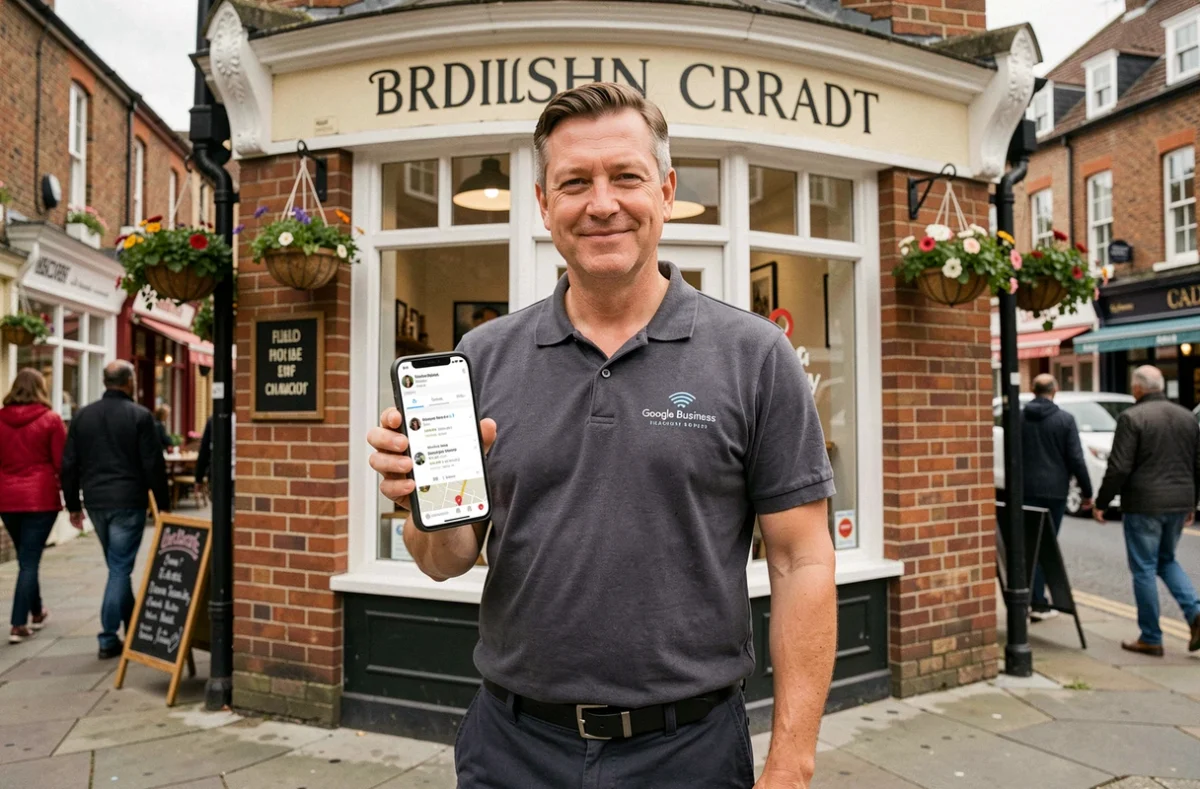
Google’s own eligibility guidelines draw a clear line between premises-based businesses and those that travel to customers. A locksmith or mobile mechanic who never receives clients at a home office should hide that address on the profile and define a service area instead. Listing a residential address when customers do not visit it risks suspension.
A second constraint matters for firms tempted to create multiple profiles targeting different towns. Google permits separate profiles only where each location has distinct staff and a genuinely separate service area. Virtual offices are not allowed unless staffed during business hours. A carpet-cleaning firm registering a virtual office in Birmingham, another in Coventry, and another in Wolverhampton, all operated by the same team, violates the policy and may lose all three listings.
Practical profile hygiene
Categories should reflect the primary service, not a wish list. A domestic electrician selecting “Electrician” as the primary category and adding “Lighting Contractor” only if that work is genuinely offered keeps the profile focused. Every additional category dilutes relevance unless it matches real demand.
Business hours, service descriptions, and contact details need to match exactly across the profile, the website, and every directory listing. Inconsistency is the most common technical fault in local SEO audits, and one of the easiest to fix.
UK review rules after the Digital Markets Act 2024
Reviews remain one of the strongest local ranking factors, but how UK businesses collect and display them changed materially in April 2025. The Digital Markets, Competition and Consumers Act 2024 made it a specific offence to submit or commission fake reviews, to conceal incentives behind reviews, and to publish review information in a misleading way.
That last point is broader than it sounds. The CMA’s guidance states that aggregate ratings, review counts, and rankings must not mislead. Selectively showcasing five-star testimonials on a landing page while suppressing negative ones is cited as an example of misleading publication. A service business pulling reviews onto its own site via a widget or manually curated quotes needs to check both the selection and the presentation.
What compliant review generation looks like
Asking every customer for feedback after a job is fine. Offering a discount on future work in exchange for a review is fine too, provided the incentive is disclosed alongside the review. What is no longer permissible is hiding the incentive or steering only satisfied customers towards the review platform.
For practical purposes, the safest approach is a simple post-service email or SMS sent to every client, linking to the Google profile. No filtering, no conditional logic, no gift cards mentioned only verbally.
Local keyword strategy beyond “near me”
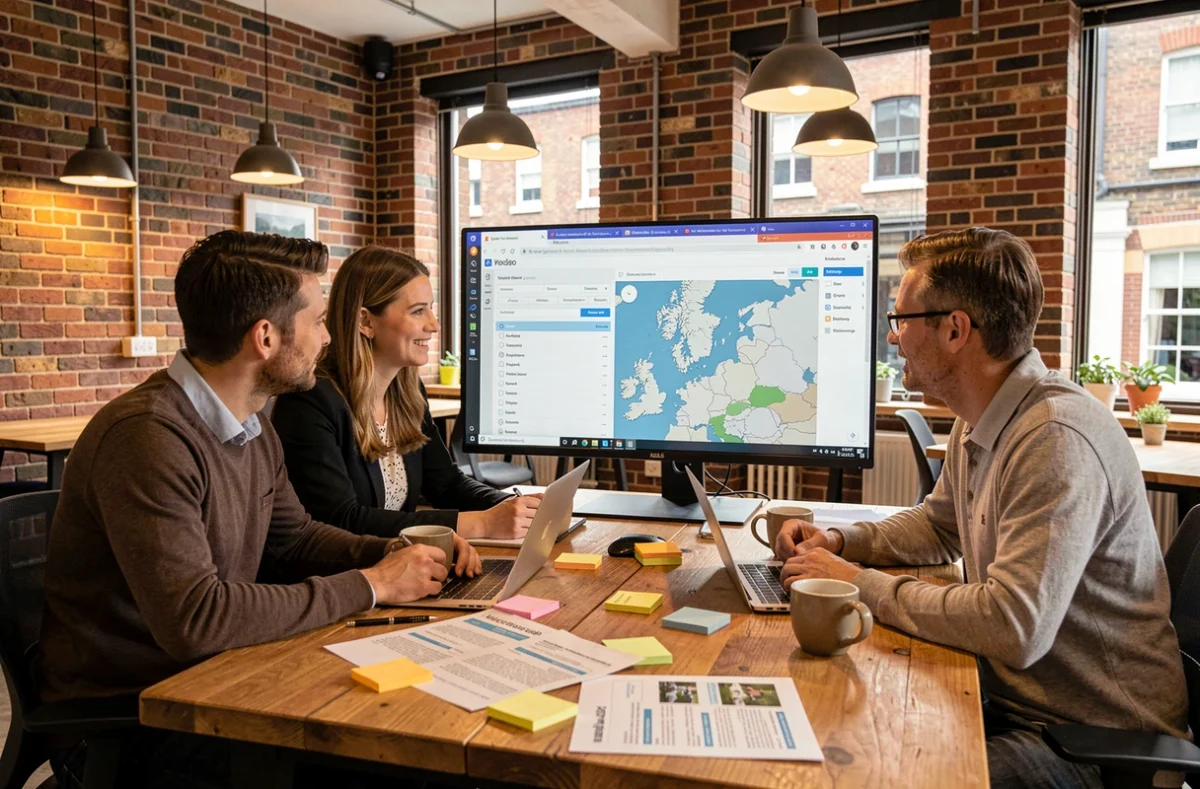
“Near me” queries are useful shorthand, but most service searches in the UK follow a different pattern: service plus location. “Boiler repair Leeds”, “conveyancer Chelmsford”, “garden clearance SW London”. Optimising for these specific combinations matters more than chasing generic proximity terms.
Each core service deserves a dedicated page targeting a primary location. A pest-control firm covering three boroughs benefits from three landing pages, each with genuinely distinct content about the area served, rather than one page listing every postcode. Google treats thin, duplicated location pages as low quality. The page needs local detail: access considerations, common property types in the area, or local regulations that affect the service.
Content that earns local links
Directory citations (Yell, Thomson Local, Checkatrade, Bark) remain a baseline. They confirm the business exists at a stated location. Beyond directories, the most effective local content answers questions specific to the area. A roofer in Bristol writing about flat-roof drainage problems common to Victorian terraces in Clifton provides genuine value that a generic roofing guide does not. That specificity also attracts links from local forums, community sites, and trade bodies.
Structuring local data for AI and traditional search
As search shifts towards AI-generated summaries, the structured data a business provides becomes its primary interface with these systems. Schema markup for LocalBusiness, Service, and OpeningHoursSpecification feeds Google’s Knowledge Graph and, by extension, the AI models that draw from it.
For a service-area business, the key schema fields are areaServed (using GeoCircle or a list of Place entities), serviceType, and telephone. Marking up FAQ content with FAQPage schema gives AI tools a clean source of answers to surface directly.
Consistency across structured data, the Google Business Profile, and directory listings reinforces every signal. When all three sources agree on the service area, phone number, and opening hours, the business becomes a reliable entity in Google’s index rather than a collection of conflicting fragments.
Local SEO for UK service firms is now a compliance exercise as much as a marketing one. The review rules have legal teeth, the profile guidelines carry suspension risk, and the measurement landscape is shifting under everyone’s feet. Getting the fundamentals right, keeping data consistent, and accepting that not every impression will be countable is a more durable strategy than chasing visibility tricks that break at the next algorithm or legislative update.